
If you have been asking this question, you are probably not skeptical about SEO in general. You are skeptical about whether it makes sense for a firm like yours, where reputation travels by referral and your best clients don’t typically land from a Google search.
That is a reasonable place to start. And the honest answer is more specific than most SEO agencies will tell you.
SEO Has Not Weakened, Doing it Badly Has.
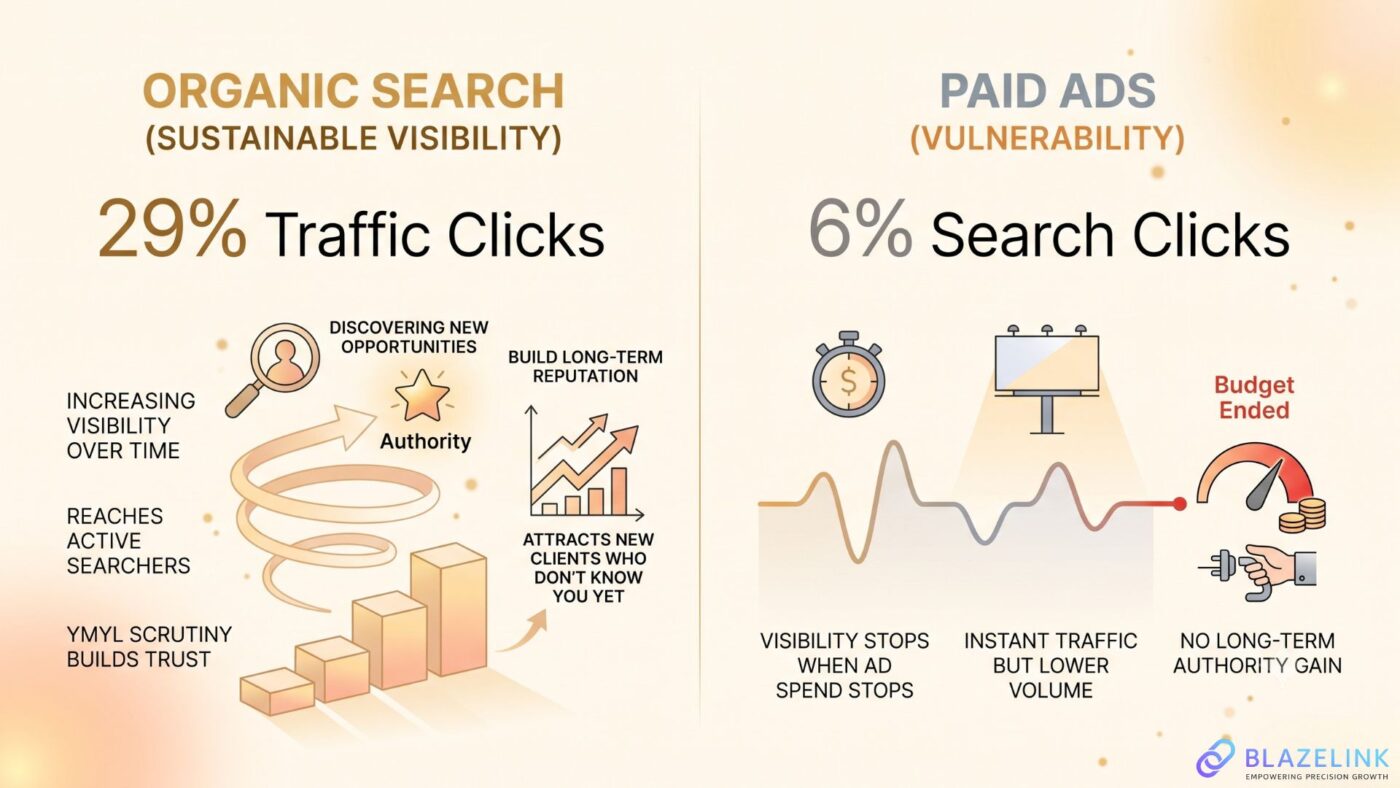
Organic search drives 29% of all web traffic across every industry, while paid ads account for just 6% of search clicks (fatjoe, 2026).
Now, 29% is not the majority of traffic. But consider what it is competing against: direct traffic, which means people already know your name and typed it in. Every other channel: social, email, paid, accounts for the rest. Organic search is the only channel that puts you in front of people who are actively looking for what you do but do not know you yet. That is a different kind of visitor, and for professional services firms, it is often the most valuable one.
The question is not whether SEO works. It is whether your website is built to satisfy a much stricter standard of authority, because a lot of professional services sit in a category Google treats with particular scrutiny: YMYL (Your Money or Your Life), where the bar for trust and expertise is significantly higher than in most other industries.
What Has Actually Changed in 2026
Search has not collapsed. But it has become significantly less forgiving of weak foundations.
AI systems now favour expertise and genuinely useful information, filtering out websites that do not deliver. If your website cannot clearly explain what you do, who you help, and why you are credible, investing in SEO is often a poor use of budget. Not because SEO does not work, but because it amplifies whatever it is built on.
This is the part worth sitting with. SEO in 2026 does not rescue a weak website. It accelerates whatever is already there. Firms that go into it with thin service pages, generic messaging, and no clear articulation of expertise will spend money and see very little. Firms that go in with a clear positioning, genuine subject matter authority, and content that actually helps their target clients will compound that over time.
Finance firms often fail by trying to appeal to everyone, using generalist messaging and service lists that are too broad. That lack of clarity makes it difficult for both users and AI systems to understand why the firm exists, let alone why it should be trusted.
The Advantage That Paid Ads Cannot Replicate
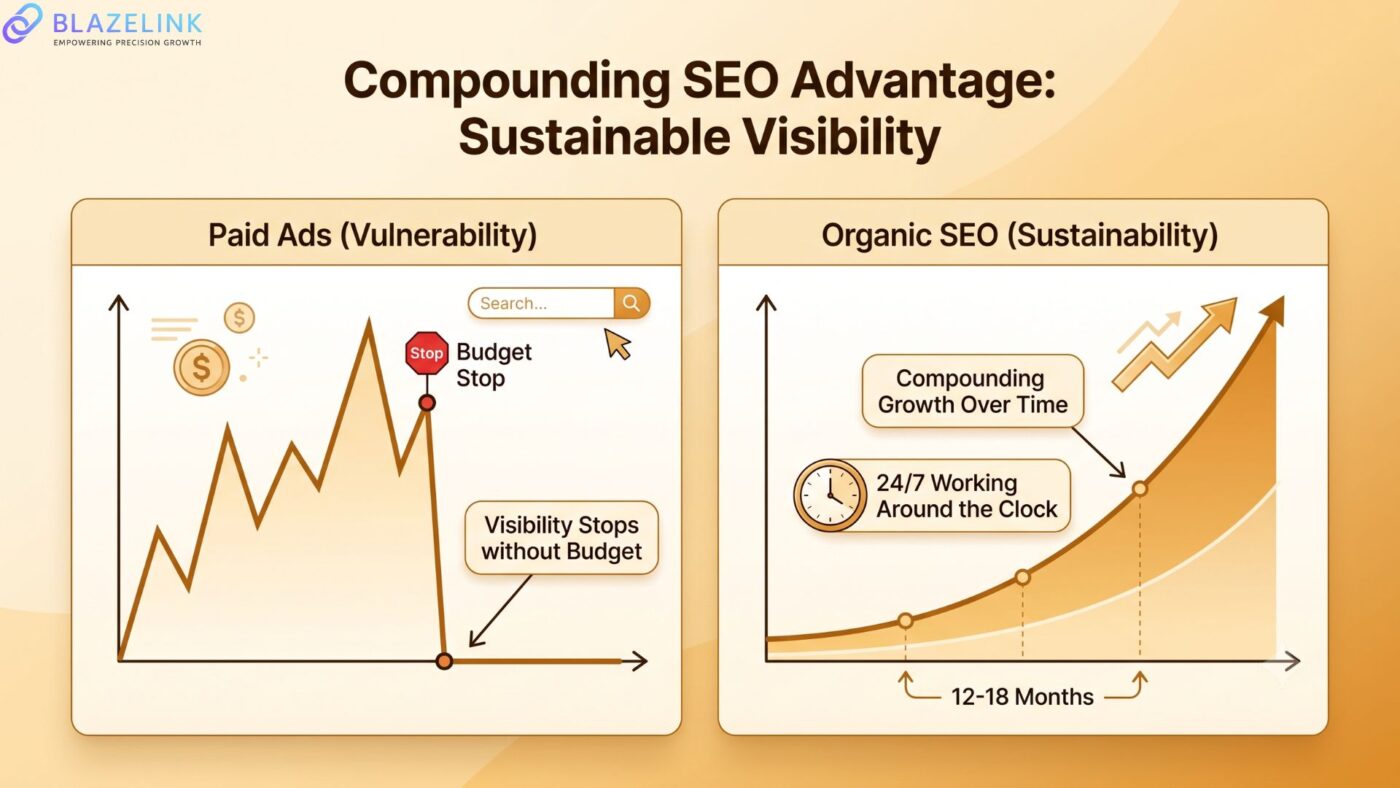
Professional services firms that rely on paid advertising face a specific vulnerability: the moment the budget stops, the visibility stops. SEO works differently. Strong search engine optimization helps businesses build sustainable visibility over time. As website authority grows, businesses often see increasing traffic, stronger brand recognition, and more inbound enquiries without constantly increasing advertising budgets.
For a firm selling high-value, long-relationship services, this matters more than it does in most industries. A client looking for an immigration lawyer or a tax advisor is not making an impulse purchase. They research. They compare. They read. An article that answers a specific question they have been sitting with for weeks does more than any banner ad. And once that article earns its position, it works around the clock without an ongoing spend attached to it.
The businesses winning at organic visibility right now are not just optimising for Google. AI-powered platforms like ChatGPT and Perplexity increasingly pull from well-organised, authoritative content when generating answers. If your business is not visible organically, it is unlikely to be referenced by AI tools either.
Where professional services firms specifically stand to gain
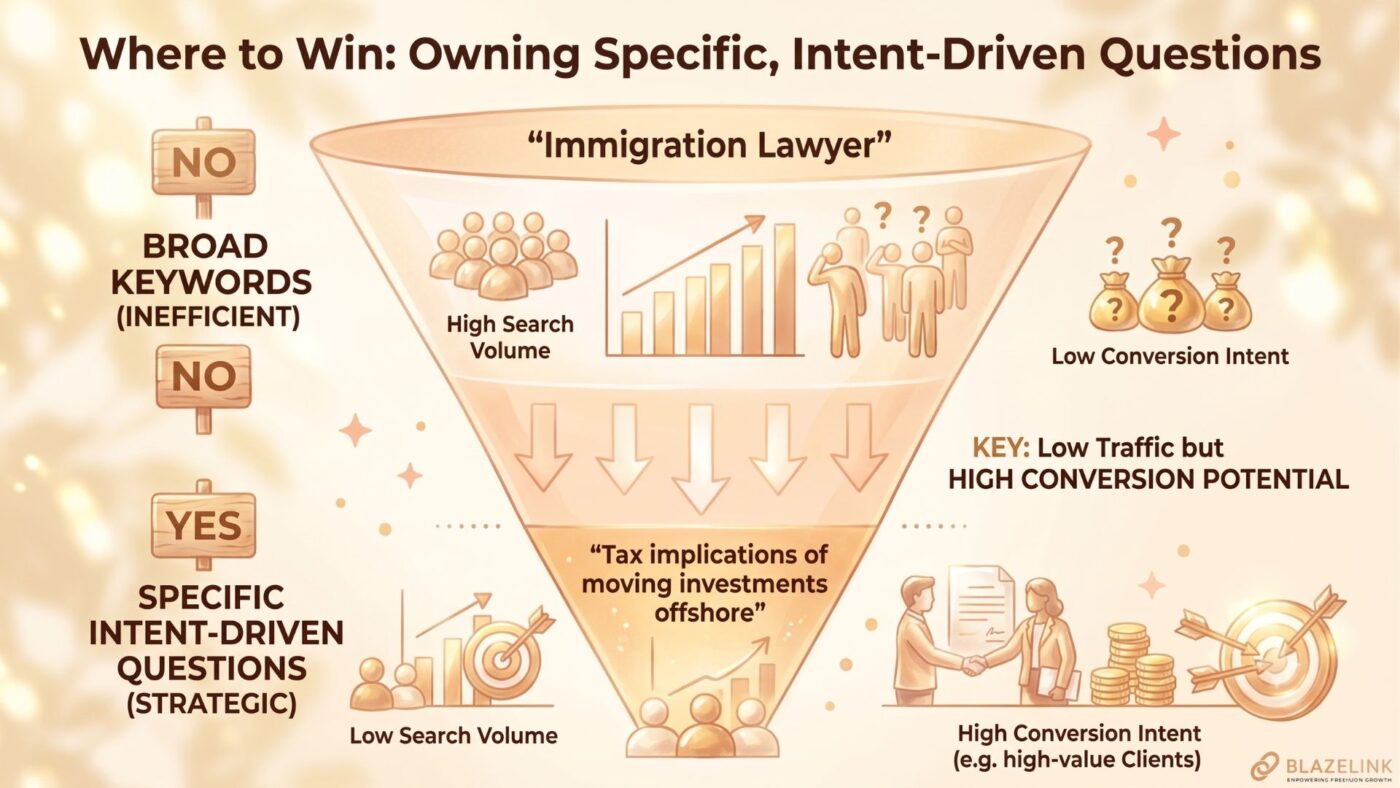
The highest-value opportunity for professional services is not ranking for broad terms like “accounting firm” or “immigration lawyer.” It is owning the specific, intent-driven questions that serious buyers ask when they are close to making a decision.
A financial planning firm does not need to rank for every money-related keyword. It needs to show up authoritatively when someone searches “how to set up a company in Taiwan as a foreigner” or “tax implications of moving investments offshore.” Those searches are lower volume. But the people conducting them are high-intent, pre-qualified, and exactly the kind of client worth acquiring.
This is the structural advantage available to professional services firms that invest in content with genuine depth: the traffic is smaller, but the conversion potential is far higher than anything paid search typically delivers at scale.
So is SEO Still Worth it?
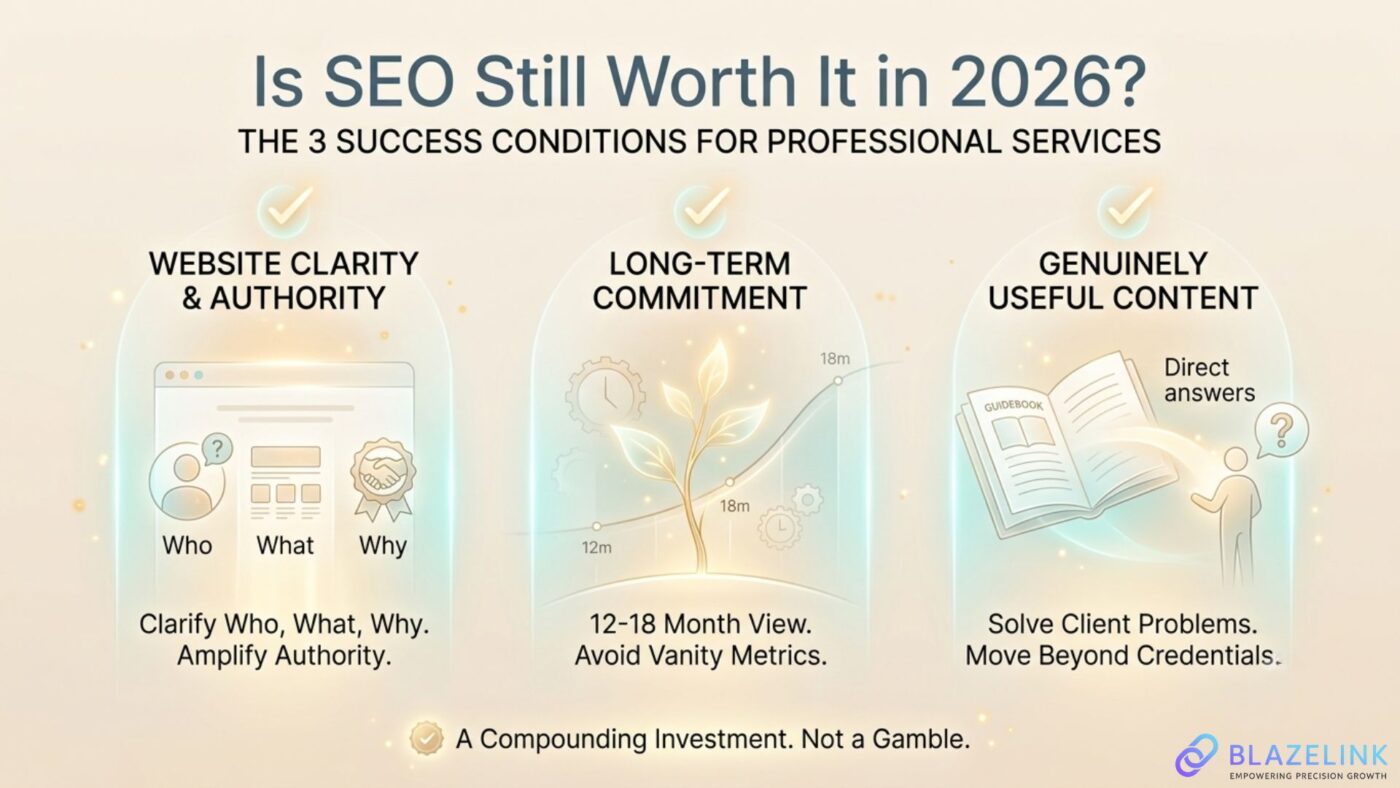
For professional services firms, the answer is conditional but weighted toward yes, under three circumstances.
First, your website clearly communicates what you do, who you serve, and why your expertise is credible. SEO cannot fix a site that fails to do this. It can only amplify it.
Second, you are thinking in terms of 12 to 18 months, not 60 days. SEO proves worthwhile for most established businesses willing to invest consistently over that timeline. The key is choosing providers who focus on business outcomes rather than vanity metrics.
Third, you are willing to create content that is genuinely useful to your prospective clients, not just content that signals your credentials. The distinction matters more than it ever has.
If those three conditions are in place, SEO is not a gamble for professional services. It is one of the few marketing investments that gets more valuable over time rather than more expensive.
[ Get Your International Traffic Consultation ]