
For many brands, the first attempt at going global looks the same: take the existing website, translate it into English (or another target language), publish it on a /en/ subfolder, and wait for international leads to arrive.
A few months later, the numbers tell a familiar story. Organic traffic from the target market is negligible. The few visitors who do land on the translated pages bounce quickly. The contact form stays quiet. The conclusion that often follows is that the new market is “harder than expected” or that “the brand isn’t well known yet.” Both of those statements may be true, but neither explains the real problem.
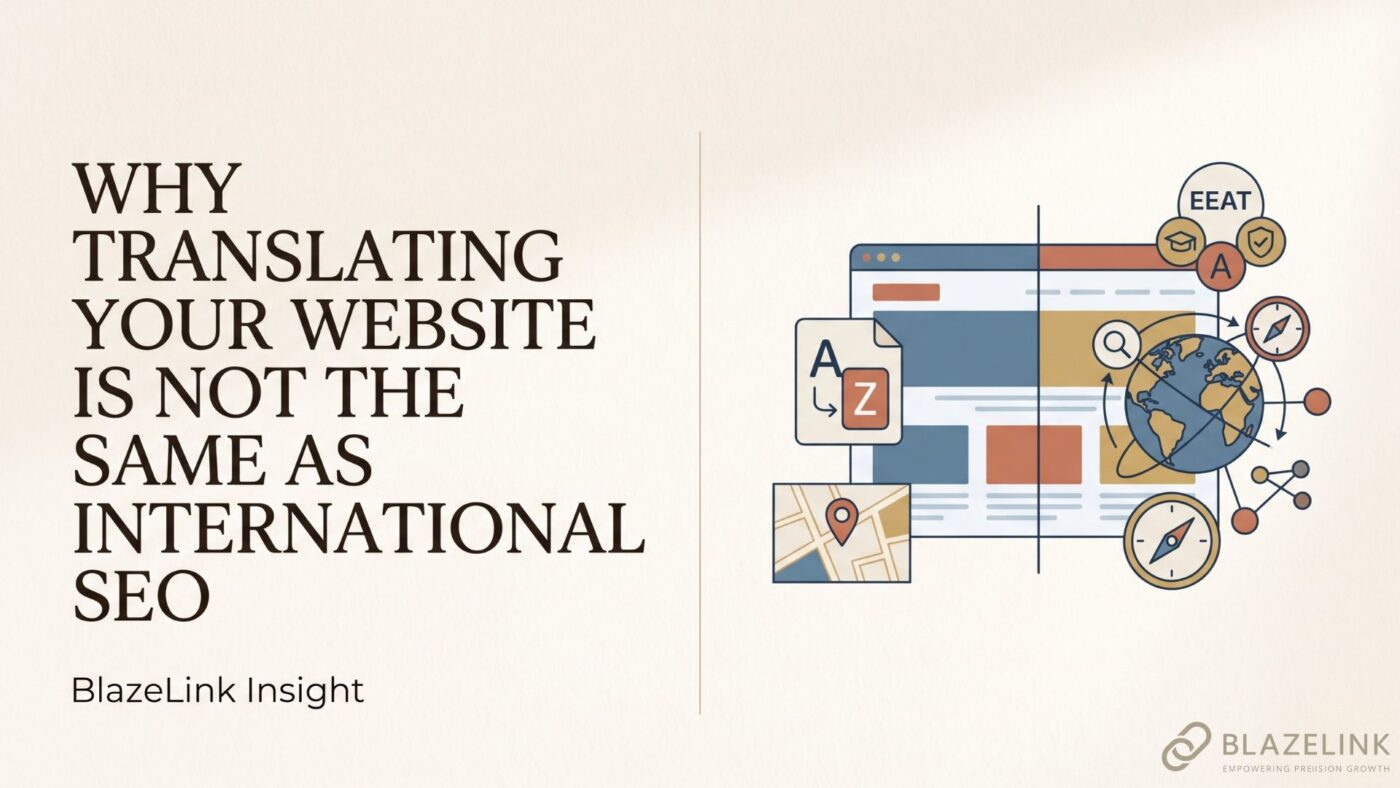
The real problem is that translation and international SEO serve two different purposes. Translation makes your content readable in another language, while international-focused SEO makes your business findable, credible, and competitive inside another search ecosystem, and another market. Skipping the second step doesn’t just slow growth – it often produces a website that search engines have no reason to reward with high rankings – and that foreign buyers have no realistic way of finding.
Let’s find out why the two are different, where translation alone falls short, and what an international SEO strategy actually covers.
What Translation Does for Your Business, and What It Doesn’t
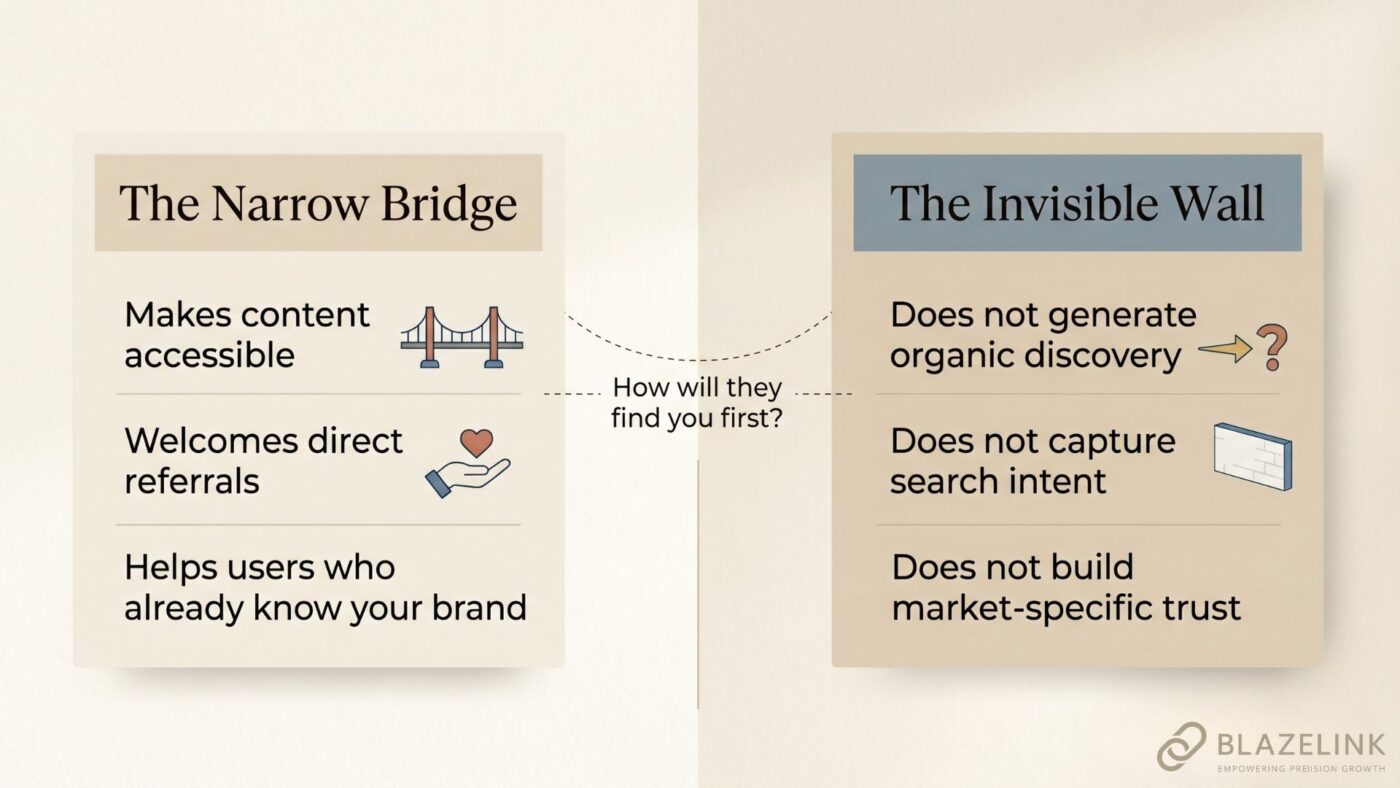
A good translation accomplishes something genuinely valuable. It makes your existing content accessible to readers in another language. If a potential client already knows your brand and lands on your English site through a referral, or a direct link, translated pages let them understand who you are and what you offer.
That is a real benefit, but it is a narrow one. It assumes the visitor already exists and is looking for your business. It assumes they found you through some channel other than search.
For most brands entering a foreign market, that assumption doesn’t hold. The vast majority of potential buyers in the US, UK, or other English-speaking markets may have never heard of your company. They will encounter you, if at all, by searching for a problem you solve. Whether your translated page ever appears in those searches depends on factors that translation alone cannot influence.
Translation handles language. International SEO handles everything that determines whether your content is seen, trusted, and chosen in a foreign search market.
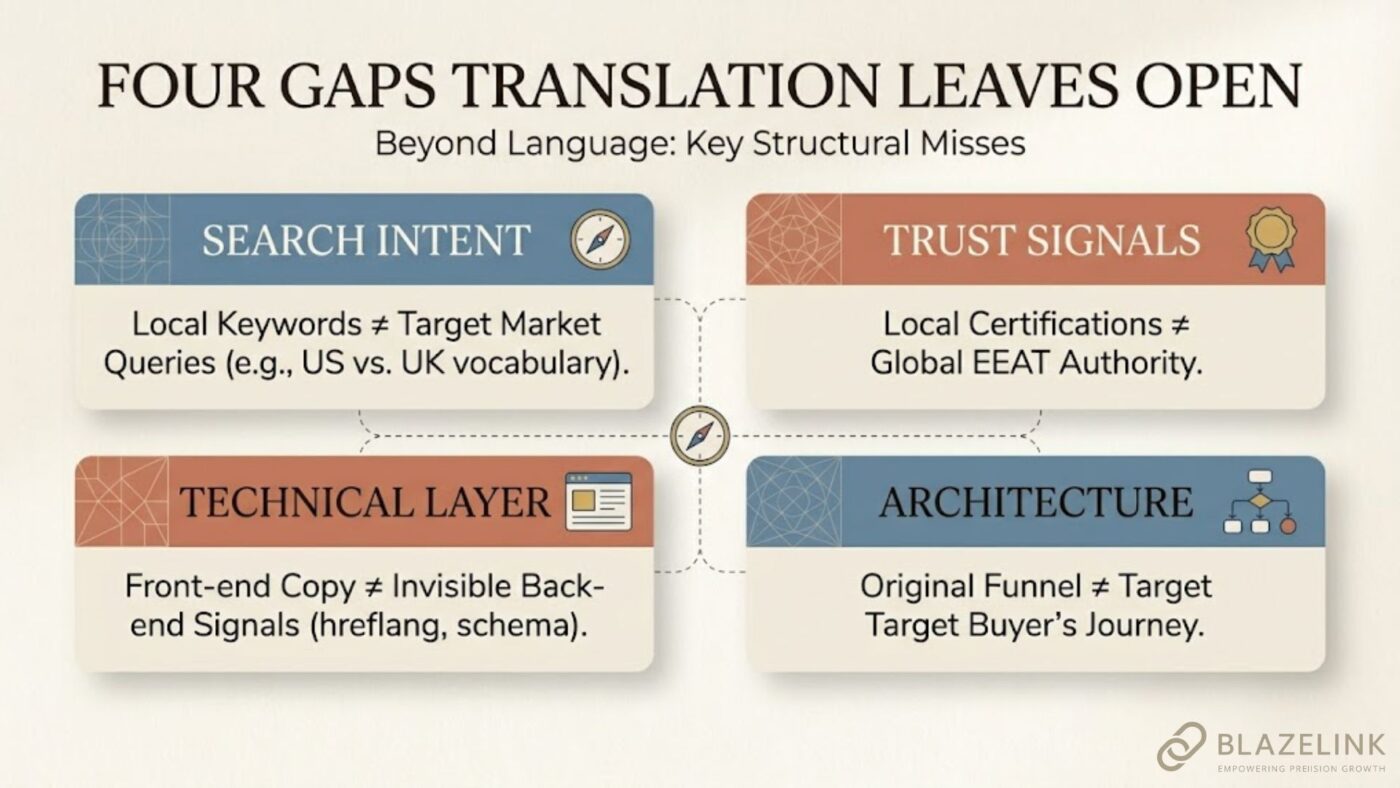
Four Gaps That Translation Leaves Open
When a website is translated without an SEO strategy underneath it, four specific gaps tend to appear. Each one is invisible from the inside of the business, but each one quietly limits how the site performs.
1. Search Intent Does Not Translate Word for Word
The phrase your local clients type into Google is rarely a direct translation of what an American or British buyer types when they have the same need. Buyers in different markets use different vocabulary, frame their problems differently, and arrive at the buying decision through different question sequences.
A translated page faithfully reflects the keyword strategy in the original language. That strategy was built around how local buyers search. When the same keywords are translated literally, the English version often targets phrases that English-speaking buyers do not actually use, or that have entirely different commercial intent in the target market. And English itself is not one market: a UK buyer will use different terminology from a US buyer searching for the same thing.
International SEO begins with rebuilding keyword research from scratch in the target language and market. The goal is not to translate the keywords. It is to discover what the new audience actually searches for, and to map those queries to the right pages on your site.
2. Trust Signals Are Market-Specific
Search engines, particularly Google, evaluate websites against a framework popularly referred to as EEAT: experience, expertise, authoritativeness, and trustworthiness. In regulated or high-stakes fields like finance, law, healthcare, and professional services, EEAT signals weigh heavily in ranking decisions.
A translated site usually preserves the trust signals that work in the original market: local certifications, local press mentions, local case studies, local team bios. These are credible to a local reader. They carry far less weight with an English-speaking buyer who has never heard of the certifying body, the publication, or the regulatory framework being referenced.
Building international trust signals means more than translating existing credentials. It involves restructuring author pages, sourcing market-relevant references and citations, presenting credentials in formats familiar to the target audience, and earning mentions from publications and sites that carry authority in that market. None of this happens through translation.
3. Technical Signals Tell Google Who You Are For
A translated site running on the original domain, without proper international targeting and technical SEO in place (think hreflang tags), sends ambiguous signals to search engines. Google needs to understand which version of your site is intended for which audience. Without that clarity, it tends to default to surfacing the original-language version, or to ranking the translated pages poorly in the target market.
The technical layer of international SEO addresses this directly. It includes properly configured hreflang tags that tell Google which page version belongs to which language and region, decisions about subdomain versus subfolder structure, schema markup adjusted for the target market, and clear canonical structures to prevent duplicate content issues.
These elements are not visible on the page. A reader cannot see them. But search engines depend on them to decide where your content belongs and who should see it.
4. Content Architecture Reflects Local Buyer Journeys
A website’s structure, its topic clusters, internal linking, and navigation hierarchy, should reflect how buyers move from awareness to decision. That structure is usually built around the original market.
A buyer in your local market researching a professional service may follow one sequence of questions. A buyer in the UK researching the same service may follow a different sequence, with different concerns surfacing at different stages. Pages that work as a logical funnel in one market can feel disjointed or incomplete in another.
International SEO involves auditing the content architecture against the target market’s buyer journey and rebuilding the cluster structure where needed. New pillar pages may be required. Existing pages may need to be repurposed, merged, or repositioned. The goal is an architecture that matches how the new audience actually researches, not a mirror of the original.
What International SEO Actually Involves
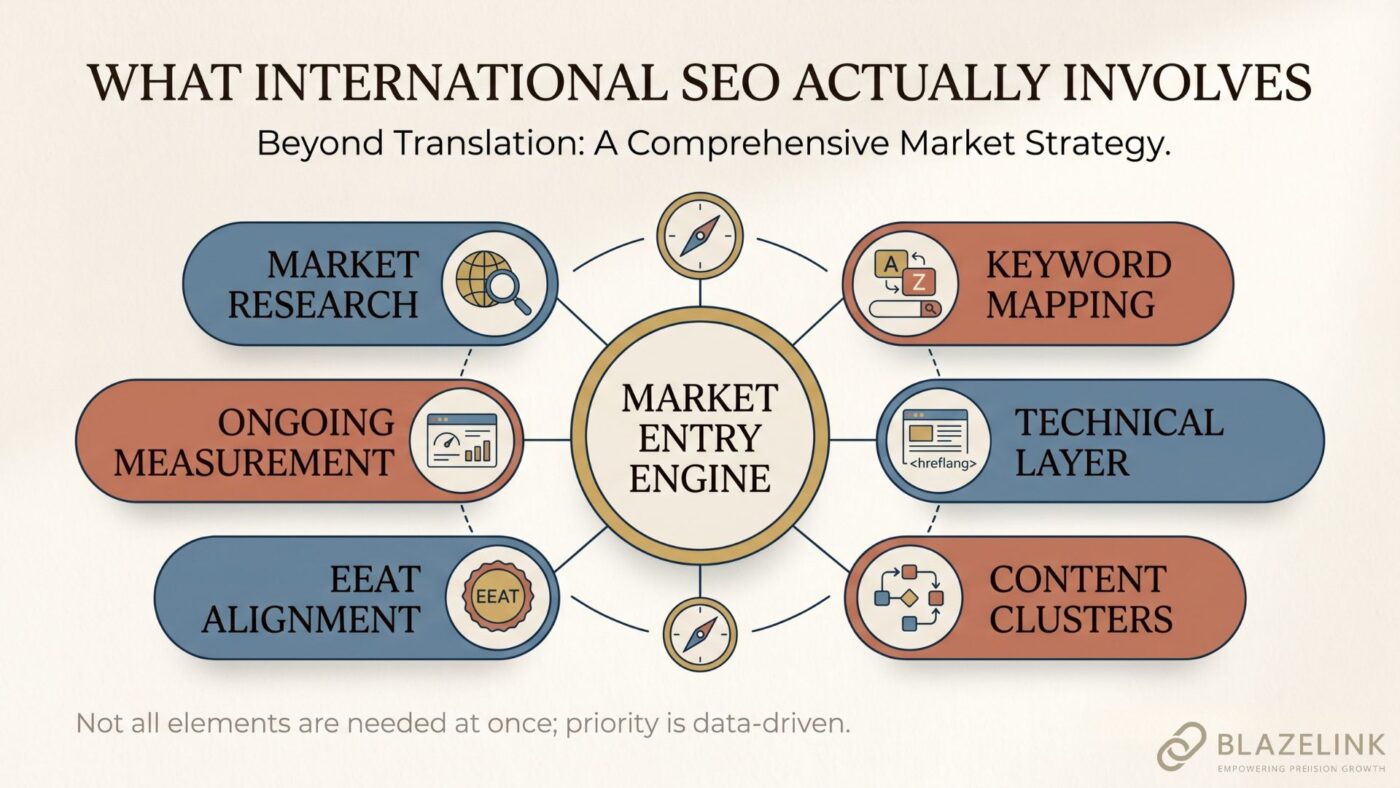
When the four gaps above are addressed properly, international SEO comes to look less like a translation project and more like a market entry project. The work typically covers:
- Market and competitor research in the target country
- Keyword and search intent mapping in the target language
- Content strategy and architecture aligned to local buyer journeys
- On-page optimization rebuilt for the new keyword set
- Technical implementation: hreflang, site structure, schema, performance
- EEAT and trust-signal development for the new market
- Local link acquisition and digital PR
- Ongoing measurement against market-specific benchmarks
Not every project requires all of these elements at once. The right starting point depends on the brand’s current state, competitive intensity in the target market, and the timeframe for expected results. But translation alone covers, at most, a small fraction of this list.
When Translation Is Enough, and When It Isn’t
Translation as a standalone solution can be reasonable in narrow circumstances. If your international traffic is almost entirely direct or referral, if you don’t expect organic search to be a meaningful channel, and if your foreign buyers already know your brand before they visit, then a clean translation may serve your needs adequately.
The picture changes as soon as organic search becomes part of how you expect to grow. Once the goal is to be discovered by buyers who don’t yet know you, the limitations of translation become structural. No amount of careful language work will close the gaps in keyword targeting, trust signals, technical configuration, and content architecture.
This is the point at which many brands realize their English website is not underperforming because the translation is poor. It is underperforming because translation was asked to do a job it was never designed for.
Moving Forward
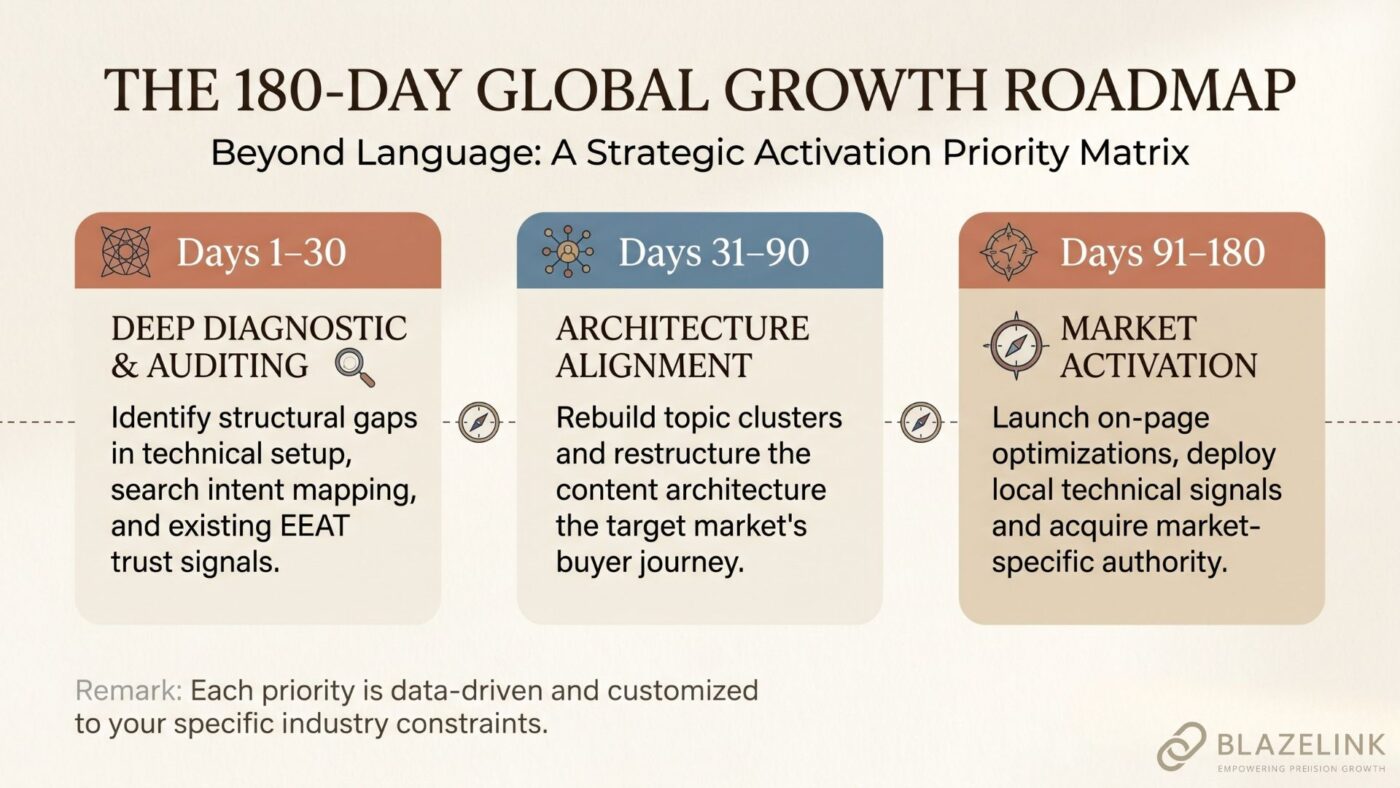
For most companies entering English-speaking markets, the practical question is not whether to invest in international SEO but when and at what depth. A useful first step is an honest audit of where the current site stands: how it is configured for international targeting, what search intent it actually captures in the target market, what trust signals it carries for foreign buyers, and how its architecture aligns with how those buyers research.
If you are weighing how your current website performs against your expansion goals, BlazeLink can help with auditing your site and assessing your specific case. We will review your current setup, your competitive landscape in the target market, and the priorities that would have the most impact in the first 180 days. The aim is to give you a clearer view of where your international growth potential currently sits, and what it would take to unlock it.